Chevrolet Cavalier (1995) – fuse box diagram
Year of production: 1995
Inside Vehicle Fuse Block
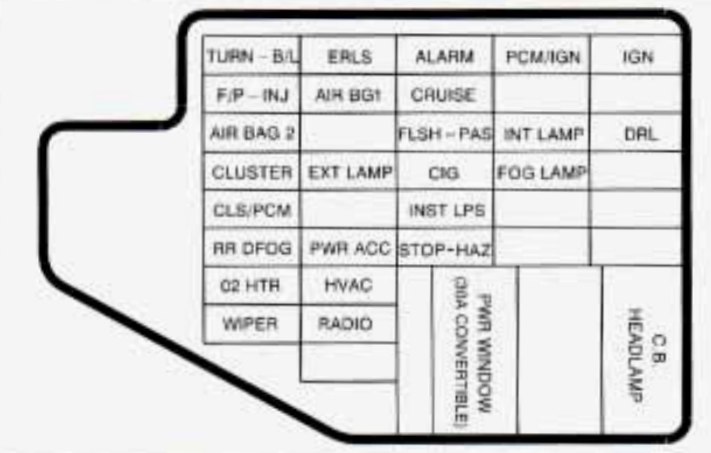
| Fuse | Circuitry |
| AIR BG 1 | Air Bag-DERM (Diagnostic Energy Reserve Module) Power |
| AIR BG 2 | Air Bag-DERM Crank Signal |
| ALARM | Alarm Module: Illuminated Entry, Warning Chimes |
| CIG | Cigar Lighter, Horn, Diagnostic Connector |
| CLS/PCM | Instrument Cluster, Powertrain Control Module |
| CLUSTER | Instrument Cluster, Anti-Lock Brake System |
| CRUISE | Cruise Control |
| DRL | Daytime Running Lamps |
| ERLS | Automatic Transaxle, Brake-Transaxle Shift Interlock, A/C Compressor, Cruise Control, Exhaust Gas Recirculation (2.2L Engine), Cannister Purge Valve, A/C High Pressure Switch (2.3L Engine) |
| EXT LAMP | Park Lamps, Side Marker Lamps, Instrument Panel Lamp |
| F/P-INJ | Fuel Pump, Fuel Injectors |
| FLSH-PAS | Flash To Pass Lamps |
| HEADLAMP | Headlamps |
| HVAC | Heater/A/C Control, Rear Window Defogger, Anti-lock Brake System, Engine Cooling Fan (2.2L Engine), Engine Vent Heater (2.3L Engine) |
| IGN | Engine Ignition |
| INST LPS | Instrument Panel Lamps |
| INT LAMP | Alarm Module: illuminated Entry, Warning Chimes, Overhead Lamps, Map/Reading Lamps, Glove Box Lamp, Trunk Lamp, Radio, Power Mirrors |
| 02 HTR | Rear 02 HTR Sensor Heater (2.3L Engine, Cal. Auto) |
| PCM/IGN | Powertrain Control Module |
| PWR ACC | Power Door Lock |
| PWR WINDOW | Power Windows, Power Sunroof |
| RADIO | Radio |
| RR DFOG | Rear Window Defogger |
| STOP-HAZ | Stop Lamps, Hazard Lamps |
| TURN-B/U | Turn Signal Lamps, Backup Lamps |
| WIPER | Windshield Wipers, Windshield Washers |
Under Hood Fuse Block
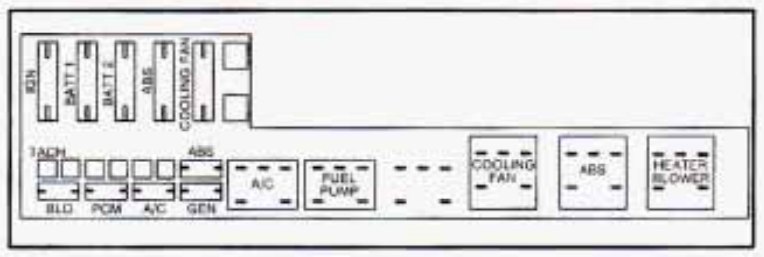
| Fuse | Circuitry |
| A/C | A/C Compressor (2.3L Engine) |
| ABS | Anti-Lock Brake System |
| ABS | Electronic Variable Orifice Steering, Anti-Lock Brake System |
| BATT 1 | Power ACC/Stop Lamp Circuits |
| BATT 2 | Lighting Circuits |
| BLO | Heater/ A/C Blower |
| COOLING FAN | Engine Cooling Fan |
| GEN | Generator-Voltage Sense |
| IGN | Ignition Switch Circuits |
| PCM | Powertrain Control Module |
WARNING: Terminal and harness assignments for individual connectors will vary depending on vehicle equipment level, model, and market.